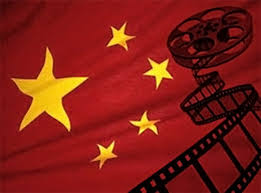
 Rewritten in Red Ink:
How China’s Ruling Party is Impacting Hollywood
Abstract
The focus of this paper is to examine the economic and soft power ramifications from the interweaving of the American and Chinese film markets pursuant to globalization and international relations between the two great powers. This paper finds that there have been economic and artistic benefits to both parties involved in the matter, particularly in the development of China’s domestic film development; however, the Chinese Communist Party and its affiliated censorship enforcement mechanisms are altering the international perceptions of not just China, in a manner that could potentially shift international perceptions of the world in favor of China. That said, if China does not correct course, the World Trade Organization could bring serious consequences against the world’s most populous state.
Background
Since the foundation of the major studios of California, America, and particularly Hollywood, has ruled the film industry worldwide. Long able to create films with only the American consumer in mind, Hollywood rarely, if ever, had to bother itself with the concerns of foreign markets, but that all changed when economic globalization took turned the business world upside down. Now, with the film industry getting larger and more profitable than ever before, movies continue to grow more expensive, one of America’s largest industries is having to get increasingly creative to continue turning profits.
It is no secret that much of America’s former manufacturing glory has been sent to the Far East. What isn’t as often acknowledged by the average armchair economist is the expansion of the market available to American businesses, and that includes Tinseltown. While the Chinese population at large still face great challenges on the human rights and personal income fronts, the average income of the population of most citizens is increasing rapidly, growing almost eightfold from 2000 to 2014 (O’Conner and Armstrong). With this newly found disposable income and a newly forming middle class, China has grown to be the world’s second biggest cinema market, second only to the United States (China’s Film Industry) and is expected to become the largest market by 2018 (O’Connor and Armstrong). With the looming giant rising on the horizon, it is high time to analyze the ramifications of Hollywood’s newfound gravy boat.
Actors
Hollywood: This name is used in reference to the American film industry as a whole (and occasionally other Western studios). Any references to the geographical location are intended to be read as such, and should be thought of as a group of businesses within the industry because that is how they function in the context of this paper. Different production companies, studios, and specific films will be referenced specifically as required, but the industry does have a tendency to follow certain trends, and, like any industry, those trends are always to follow money. While all All actions made by the businesses and their leaders are made with the goal of maximizing profits in the long term, and allowing artists to create unique products as an added benefit.
Chinese Communist Party (CCP): The ruling party of the world’s most populous nation, and one known for strictly policing the content available for consumption and most aspects of public life in the nation. Recent years have seen the party slowly begin to open the nation. President Xi Jinping, the elected head of state and party, expressed in a 2014 speech that he still considers the purpose of Chinese art to be the original mandate from Mao, service of politics, namely the politics of the CCP (O'Connor and Armstrong). While the Party does want to grow both national revenue, provide entertainment to the people, and grow a new domestic industry, the ultimate goal is still to advance the agenda of the Communist’s of China.
State Administration of Press, Publication, Radio, Film, and Television of the People’s Republic of China (SAPPRFT): Certainly the longest names to be featured in this paper, SAPPRFT serves as the CCP’s primary method of censoring the content fed to the people. The primary goal of SAPPRFT is to advance the Party’s agenda through the expressions, or lack thereof, in the media. Any actions taken by SAPPRFT can be seen as actions of the CCP, but a specific enforcement mechanism.
Events
The Beginning
Shortly after crackdowns on free expression, the CCP closed its film market to exclusively domestic films in 1979, and most of those were propaganda films (China’s Film Industry). Unsurprisingly, “the film market dwindled, with attendance falling by 79% from 1982 to 1991” (China’s Film Industry). So, while America and most of the world were busting blocks to see such classic hits as Star Wars, Back to the Future, Star Wars: The Empire Strikes Back, Ferris Buehler’s Day Off, and Star Wars: The Return of the Jedi, Chinese audiences were electing to not see the declarations of the greatness of the the CCP and their People’s Army. With so little money available to the hands of the Chinese consumer, there really wasn’t much need to pay to see more propaganda proclaiming the greatness of the authoritarians above them. That all changed in 1991, when China took its very first small step toward Hollywood.
In 1991 “[t]o revive its movie business, China brought in its first foreign film in 1994 — Warner Bros.’ The Fugitive, starring Harrison Ford and Tommy Lee Jones” (China’s Film Industry). Universally regarded as a groundbreaking moment in the history of both countries, and a major boon for Hollywood, this crack in the door to China’s cinemas marked a new period for both markets. Regardless, Hollywood was a stranger in a strange place, and the traditional tactics for making a blockbuster would need some work to be up to snuff for the world’s most populous nation.
Growth and Expansion
The situation in China has been rapidly improving for the average Chinese person, and “Chinese consumers have increased their recreational spending in recent years with rising income levels and an increase in discretionary funds” (Zhitao). In addition to having the world’s largest population, China is seeing a period of immense growth in prosperity for the people of China that might be likened to the United States following the Second World War. There’s more than a vague concept of an increase in spending, “In 2015, box office revenue hit a record $6.8 billion, up 49% “ (China’s Film Market). This data makes it abundantly clear that China’s film market is not only massive, but still growing. Qiaowei Shen, a marketing professor with the University of Pennsylvania, notes that China has potential for even further growth. According to Dr. Shen, the average Chinese person goes to the cinema less than once a year. “There’s huge potential [for growth] if the average Chinese person [just] goes to the movies two times a year, then box office receipts will increase by two times” (China’s Film Market). If China can maintain its current rate of growth, then they will have outpaced the United States as the world’s largest film market by 2018 (O’Connor and Armstrong). This leads to a new and lucrative revenue stream for Hollywood, the current heavyweight champ, and a new industry for China to come screaming into.
In 2014, the top ten box office hits, were an even split between domestic and imported films (Jing). 2015, the following year would prove to be an even bigger year for the burgeoning market. In the course of just a few months, China saw its all-time box office record broken not once, but twice by Fast and Furious 7 and Monster Hunt, an American film and a Chinese film, respectively, in the course of a few months (O’Connor and Armstrong). These two years of unqualified success were nothing if not proof of the viability for both domestic and imported goods in the cinema. With these back to back record breakers, Hollywood and Chinese industrialists alike are pouring funds into developing domestic means of production to feed the market.
Among the great problems facing the Chinese market is distribution. According to Shen, “Adding movie screens and building cinemas, especially in the smaller cities, will spur growth of the entertainment industry in China.” As it stands, China is adding an average of fifteen screens a day and is expected to have significantly more than America by 2017 (China’s Film Market). Liu Shuyao is an investor looking to expand the revenue through more high tech means. Shuyao is the founder of 100 TV, a company making an internet streaming service exclusively for mobile devices in the Asian market (Jing). With this advancement, even the most remote of villages could gain access to a pocket-sized silver screen, potentially providing an even wider market, as demonstrated by services such as Netflix and Hulu in the West. This presents possibly the most dramatic opportunity to expand the Chinese film market; however, businesses aren’t satisfied with just delivering the product.
In late 2014, the Dalian Wanda Group made a major move to bring production into their home turf with the announcement of the “Movie Metropolis,” in Qingdao an $8.2 billion dollar venture to produce a location that would have not only twenty soundstages for production, but also a nearby resort and amusement park for the families of actors, and a potential billion dollars in annual funding for production (Verrier). Since the announcement, there have already been pledges from Leonardo DiCaprio, Nicole Kidman, and Harvey Weinstein to work with the studio (China’s Film Industry). In addition, DreamWorks Studios has begun to developing movies in China, specifically setting up the Oriental DreamWorks Studio in Shanghai for the animated movie Kung Fu Panda 3 (O’Connor and Armstrong). By adding Chinese actors and shifting the production to China, there were mutual benefits to gain for both sides of the equation.
Cooperation
In an effort to defend the growth of domestic development, the CCP has placed strict requirements on imported films. There are a few ways for American films to enter Chinese cinemas, and due to the production restraints currently being worked around, the most prominent is the profit sharing method. Under a 2012 World Trade Organization Agreement in 2012, foreign studios are limited to 34 releases a year, with 25% of profits going to the original creators, and 75% going to various film related destinations in China (O’Connor and Armstrong). This is where the appeal of a foreign office, such as Oriental Dreamworks with Kung Fu Panda 3, comes into play. If a film can claim the status of being co-produced domestically, there is no limit on the number of films that can be released, and the revenue share goes from 25% to 43% (Jing). To be co-produced “can include having at least one scene shot in China, casting at least one Chinese actor, receiving a minimum one-third of the movie’s total investment from Chinese companies, and, in general, illustrating ‘positive Chinese elements’” (O’Connor and Armstrong).
Beyond merely making money, there is also an element of craft that both sides can improve upon with the mutual assistance of the other party. When learning to do anything, it makes sense to work with the best, and no nation has ever done film as well as America. From Charlie Chaplin to Christopher Nolan, silent films to Michael Bay, it is difficult to compare to the breadth of film available from Hollywood. For now. As more films make the jump to China, the industry is learning fast. “To support China’s burgeoning film industry, the influx of filmmaking know-how is just as important as the box office revenue from imported Hollywood films,” (O’Connor and Armstrong). Film is like any other commercial product, and no one wants to pay for low quality products. To make higher quality products, a manufacturer needs more than high quality parts, they also need to know how to put them together in a sensible manner. While China has yet to produce a filmmaker of the caliber of Akira Kurosawa, they are fertilizing the industry to yield one.
When it comes to making a product, the best way to learn is by doing. “Speaking about Southpaw, a recent film co produced with Dalian Wanda Group Corp., the Weinstein Company’s former Chief Operating Officer David Glasser stated that the Chinese ‘were on the set and involved in production, post production, marketing, everything’ because ‘they wanted to learn how we do what we do,’” (O’Connor and Armstrong). James Cameron, best known for producing some of the world’s highest grossing films such as Titanic and Avatar, made significant moves for both economics and craft. In preparation for the upcoming installments of Cameron’s Avatar franchise, Cameron’s production company, Cameron Pace Group, made a mutually beneficial arrangement with Tianjin North Film Group and Tianjin Hi-Tech Holding Group. This deal will give Chinese filmmakers will gain access and knowledge to on the use of high tech and cost effective means of 3D film production, and American filmmakers get increased access to make more money at the Chinese box office, and given the financial success of the original film, the sequel could get even bigger with incredible, and otherwise limited, market for a franchise that could very well go on to be one of the largest of all times (O’Connor and Armstrong). A sometimes small increase in revenue might seem pointless in an industry that gives out gold statues to various workers throughout the year, but filmmaking is expensive, and every additional ticket sale, particularly to a billion people, can save a film.
The return of superstar Arnold Schwarzenegger for Terminator: Genisys was expected to be a return to former box office glory following the transgressions of prior installments Terminator after the original trilogy. The box office failed to agree. During its run in the States, terminator failed to break $100 million during the summer blockbuster period, rendering is a flop (Lang). That changed when the “Governator” headed East. Once Terminator: Genysis broke into the Chinese market it nearly caught up to the entire American run in just 8 days, “clawing its way from flop territory into profitable terrain thanks to a big lift from Chinese audiences,” joining the likes of Hansel and Gretel: Witch Hunters and Pacific Rim as movies saved by the East where profitability is concerned (Lang). While the market decides what products are worthwhile, and what films are not, the additional income for movies, particularly those that might be considered risky, does allow for greater creative freedom for filmmakers who might know what they are doing, but want to experiment with something new. To put millions of dollars into an investment that might not pay off is a frightening proposition, but with the chance to double your earnings in China, the risk grows much smaller and more financially questionable endeavors can get the funding they need. While this may lead to some dud products along the way, it took questionable product attempts like the Geo Metro to produce a solid product like a Tesla or Prius; however, not all changes empower the creatives and the consumers.
China and Censorship
Among the glaring points of China’s policies regarding film is the policy that films display “positive Chinese elements.” The problem is, the SAPPRFT and their bosses in the CCP have never fully defined what they mean by the elements. America has the Motion Picture Association of America, but China has no ratings system, so all films must be considered acceptable to all audiences regardless of where it is produced (How China’s Censors Influence Hollywood). With that strict standard, SAPPRFT has never clearly defined or codified what is considered acceptable to Chinese audiences, so strange things will get caught up by the censors.
Now, with no age restrictions, some removals could be justified. For example, scenes with sexual tones from Cloud Atlas and Skyfall (Kang). Further restrictions regarding violence, nudity, and general sexual themes, have barred or altered foreign films like Brokeback Mountain, The Departed, and The Life of Pi (O’Connor and Armstrong). Regardless, these rules are sometimes sacrificed for positive Chinese elements. “The Flowers of War, a Chinese film starring Christian Bale, graphically portrayed the Nanking massacre with scenes depicting overt violent and sexual content. But because the film stoked anti-Japanese sentiment and was regarded as China’s top contender for an Oscar, it passed Chinese censors easily,” (O’Connor and Armstrong). This gives completely Chinese films a major advantage of creative liberty over their foreign counterparts, where a Chinese film would not meet such roadblocks in America, where films have a wide array of ratings with established guidelines that does not include nationality.
Some of these changes are harmless. For instance, the film Looper changed the fictional world capital from Paris to a considerably more likely Shanghai (Kang). The change didn’t alter the plot, and by bringing the underrepresented Asian community into the film, could be a net positive. Optimistically, “the Chinese-driven expansion of jobs for Asian and Asian American artists in Hollywood will trickle down to directors and screenwriters, so that Asian/American perspectives and experiences can one day coexist in multiplexes alongside ‘mainstream’ ones” (Kang). In an interesting turn, Chinese audiences have even seen concessions to appeal more to their demographic.
The prior concession mentioned for Looper was a change made to appeal to Chinese audiences more, but it is not a lone experience. Oscar nominee Gravity made a direct appeal to China by showing their space program as competent and selfless when helping the troubled American, and the inclusion of Chinese products and landmarks in Skyfall among others, and the remake of Red Dawn underwent digital editing to switch the antagonist from China to North Korea (O’Connor and Armstrong). More dramatically, the Chinese audience featured additional content compared to the rest of the world in Iron Man 3. “For the Chinese release of Iron Man 3, moviemakers inserted a scene of doctors, played by major Chinese movie stars, discussing surgery on the superhero” (How China’s Censors Influence Hollywood). While not received with particularly positive fanfare, it does represent a change in a big budget movie based around an all-American to directly appeal to the Chinese market.
Not all changes are so innocent. Some changes might be suspect, like the removal of James Bond killing a Chinese man in Skyfall or the removal of Tom Cruise walking past clothes drying on outdoor lines in Shanghai in Mission Impossible III (O’Connor and Armstrong), but still, harmless to the overall plot. Other changes are of a more fundamental sort. Even Chinese co-produced movies already approved can meet troubles on the way. Recently, the reboot of The Karate Kid was co-produced with Chinese investors. “The Karate Kid was shot with a Chinese-sanctioned script. SAPPRFT, however, still rejected the film’s initial request for distribution in China after production was complete because the villain was Chinese. The Karate Kid’s release in China was delayed and 12 minutes were removed from the film before it opened in China” (O’Connor and Armstrong). Why couldn’t that be included? Because the CCP forbids any negative portrayal or implications about China. The Party is unwilling to allow the portrayal of any Chinese person as being worse than another, and that’s just the beginning of the pro-China censorship.
A 3D re-release of Top Gun was rejected because the Chinese censors felt that the expert pilots of the MiG aircraft too openly projected American dominance. The memory-erasing devices from Men in Black 3 were removed because the censors felt it could be seen as a criticism of China’s internet censorship policies. Most extremely
the Sony production Captain Phillips was denied distribution rights in China on political grounds. The changes required to get Captain Phillips past censors would have been impossible considering the objections of China’s censors to central elements of the film. A Captain Phillips executive identified the tone of the film as a source of discomfort for censors, particularly ‘the big Military machine of the U.S. saving one U.S. citizen. China would never do the same and in no way would want to promote this idea’” (O’Connor and Armstrong).
So what? Who cares if a couple films don’t make it to China? Well, it isn’t that simple.
Because the ideas on acceptability vary so widely from censor to censor, Hollywood has no way of knowing what will make the cut, and practically every studio on the planet is hoping to make the cut into the 34 foreign films allowed into the People’s Republic. “Hollywood studios with an eye to global box office gold know they cannot ignore the Chinese market” (China’s Film Industry). With such stringent guidelines, that is a goal much easier said than done, and it is having a decidedly negative “chilling” effect on the industry which is making creatives much more hesitant to say exactly what they want for fear of not making the cut to enter China.
Filmmakers don’t want to have to make cuts. It is their film, and to let someone else alter it is to sacrifice creative ownership. Artists and producers alike want to avoid making new cuts to films not only to secure artistic vision, but also to prevent diminishing returns for the initial investment in the film. Unfortunately, “[t]he ambiguity of China’s censorship guidelines, and the Chinese government’s sensitivity to international affairs and political concerns, result in studios anticipating objections and making changes without direct pressure from SAPPRFT,” (O’Connor and Armstrong). This should be a major cause of concern for politicians around the world.
The Grand Scheme
Ideas are power, and worldwide film distribution shares a lot of ideas in a lot of different places. China’s effort to influence the world film industry shows a “concerted effort in China to move into the global entertainment and media industry to build China’s soft power [...] The cultural sector is one of the pillars of China’s Five-Year Plan, meaning the government makes an effort to support Chinese investment in entertainment [...] Aside from being good business, it is a way to protect China’s influence in the world,” (China’s Film Industry). Consider censorships, like those in Captain Phillips or in Top Gun, mentioned in the prior section.
Consider the remake of Red Dawn. The original showed a caricature of the Soviet Union, America’s great rival of the time. In the original script for the new movie, the filmmakers substituted the Soviets for the current rival superpower, China. Regardless, it is much more reasonable that China, with its seemingly limitless resources and advanced military, attack the United States than North Korea. If anything, it could be seen as a legitimate insult to Chinese capability to say that the Koreans posed more of a threat than they do, but this is the same country that won’t allow the reboot of a classic family movie unless the villain is not Chinese, and if they won’t let the United States Air Force appear to be capable of making decent pilots, they certainly wouldn’t want a campy piece of teen action portraying American youths from Colorado causing serious trouble for the People’s Army. Even if these films are harmless, there is no likely policy change on the way.
President Xi Jinpeng of China has previously affirmed Mao’s original mandate that “[Chinese] art serve politics,” (O’Connor and Armstrong). While the ruling Communist Party is more than happy to grow a new world dominating industry, it is ultimately a means of influencing and controlling the hearts and minds of the Chinese people toward the politics of the party that filters the content allowed to their cinemas. China need not be the only menace to be seen on the silver screen, but it is unreasonable to think that they never be shown as having flaws. This would not only stifle creativity but also have major impacts on how the world power is viewed. It really is ironic that Hollywood, an American institution as much as any other, once plagued by grand accusations of being the cronies of communists during the infamous Hollywood Blacklistings of the Red Scare, is now being heavily influenced, if not outright controlled, by the ideals of the Chinese Communist Party.
That doesn’t mean the States aren’t putting up a fight. It was previously mentioned in this paper that there was a 2012 agreement between the United States and China to allow more American films to enter the Chinese market, but the “Memorandum of Understanding” was more complex than simply allowing in more films into the country. This was actually an effort for China to avoid penalties from the World Trade Organization (WTO) “In April 2007, the United States brought a World Trade Organization (WTO) case against China for its restrictions on imports of films and other audiovisual and entertainment products. Two years later, a WTO panel found China’s constraints on film imports were in violation of its trading rights obligations” (O’Connor and Armstrong). Five years later, a 2012 ruling from the WTO declared that China would have to further open itself to foreign films in order to satisfy its its trade agreements, and that is not the end of the politics. “While the deal did not bring China into compliance with the WTO ruling, it did provide a temporary settlement to the dispute,” (O’Connor and Armstrong), and in 2017, the WTO will again review China’s film importation practices, and could potentially have trade regulations altered by 2018 (O’Connor and Armstrong). This could potentially force China to allow further access, likely uncensored, into the country from co-signers of the prior agreement including the United States, United Kingdom, and Saudi Arabia (Jing). Maybe the situation will change for the benefit of the West before too long, but “You will not see a Chinese communist as a villain in a Hollywood big budget movie anytime soon” (China’s Film Industry).
Conclusions
There ain’t no business like show business, but the film industry is still having to change with the times of economic globalization. There is a lot of positive progress to be made for China, America, and the rest of the world, both artistically, and financially, but both art and money serve as means of obtaining power and influence on the global political stage. In a world trying to determine its prime superpower, both the soft power of art and the economic power of the almighty dollar and yuan are being fought for on the big screen. There may not be a single shot fired for the sake of greater ticket sales, but the ability to influence the minds of moviegoers around the world, and to buy the support of those beyond convincing is without doubt a great power to any state. While Hollywood and Beijing might be in conflict to win the box office, there is no reason that the relationship can not be mutually beneficial; however, before that can happen, China is going to need to learn to play fair.
Works Cited
“China’s Film Industry: A Blockbuster in the Making” Knowledge Wharton. University of Pennsylvania, 17 February 2016. Web. 14 April 2016.
“How China’s Censors Influence Hollywood.” NPR. NPR, 18 March 2015. Web. 14 April 2016.
Jing, Ji. “A Blockbuster Business.” Beijing Review 58.5 (2015): 14-17 Web. 14 April 2016.
Kany, Inkoo. “Hollywood's Changing Its MOvies to Appease the Chinese? Good.” The Atlantic. The Atlantic Media Company, 20 March 2013. Web. 14 April 2016.
Lang, Brent. “Box Office: Chinese Crowds Lifting ‘Terminator Genisys Into Hit Territory.” Variety. Variety, 30 August 2015. Web. 14 April 2016.
O’Connor, Sean, and Nicholas Armstrong. “Directed by Hollywood, Edited by China.” U.S. China Economic and Security Review Commission. U.S. China Economic and Security Review Commission, 28 October 2015. Web. 14 April 2016.
Verrier, Richard. “China Offers Film Subsidies at New Qingdao Oriental Movie Metropolis.” Los Angeles Times. Los Angeles Times, 8 October 2014. Web. 14 April 2016.
Zhitao, Ding. “Further Opening the Film Market.” Beijing Review 58.5 (2015): 2. Web. 14 April
2016.


